DSCR Loan for Investors in Colorado Springs, CO
A debt service coverage ratio (DSCR) loan is an investment-property loan that uses qualifying rent to assess the property’s ability to cover its debt payments. Lenders also evaluate the borrower’s credit, equity, reserves, and the property itself.
Loan availability and terms depend on borrower and property qualifications.

Start with the investment you want to build.
Look at the property’s income and costs.
A DSCR loan discussion centers on rental income, property expenses, and program requirements.
A DSCR loan is an investment property mortgage that qualifies on the property's rent rather than the borrower's personal income. DSCR stands for debt service coverage ratio. For investors buying or refinancing rentals in Colorado Springs, Integrity Mortgage & Financial Inc. (NMLS #189744) helps you test whether a property's rent supports the loan.
Key Takeaways
- Rent qualifies the loan The lender compares qualifying rent with the property’s full monthly housing obligation.
- Investment property only DSCR loans are for non-owner-occupied rentals, not a home you will live in.
- Rules vary by investor Each lender or investor sets its own minimum ratio, credit, reserve and equity rules.
- Business-purpose loan Because the loan is for a business purpose, some consumer mortgage rules do not apply.
- Reserves expected Most lenders require cash reserves measured in months of the property’s payment.
- Entity ownership possible Many lenders allow the property to be held in an LLC.
Common Questions About DSCR Loans
Investors usually ask how rent is counted and how DSCR compares with conventional rental financing.
How does the lender decide what the rent is?
It depends on the lender. For a leased property it may use the lease and payment history; for a vacant or newly purchased property it usually uses the appraiser’s market rent estimate.
Do I need to show my tax returns?
Usually not for income. DSCR lenders focus on the property’s rent, though they still review credit, assets and your experience as an investor.
Can I close in an LLC?
Often, yes. Many DSCR lenders lend to an LLC when the owners also sign personally for the loan. Ask early so the title and documents are set up correctly.
Can I use a DSCR loan on a short-term rental?
Some lenders allow it with extra documentation or a market study. Rules differ widely, and local short-term rental rules also matter.
Is a DSCR loan a consumer mortgage?
Generally not. Loans made primarily for business purposes are treated differently under Regulation Z exempt transactions, which is why disclosures and protections can differ.
What if the ratio comes in low?
You may be able to add a larger down payment, choose a different property or move to a program that uses personal income. The lender decides what it will accept.
How DSCR Loans Work
A DSCR loan turns the underwriting question from what you earn to what the property earns. The steps look like a normal investment purchase with a rent analysis at the center.
-
Estimate rent
Start with an existing lease or a realistic market rent for the property.
-
Estimate the full obligation
Add principal, interest, taxes, insurance and any HOA dues for the property.
-
Check the ratio
Divide qualifying rent by that obligation. The lender sets the minimum it accepts.
-
Appraisal with rent schedule
The appraiser estimates value and market rent, which often becomes the rent the lender uses.
-
Underwriting
The lender reviews credit, reserves, equity, the entity documents and the property.
-
Close
You sign the loan documents, often as an individual or through an LLC.
When a DSCR Loan Makes Sense
DSCR loans often fit investors whose personal income documentation is complicated or who already own several rentals.
Often a good fit
Self-employed investors, owners with several financed properties and buyers who want to hold rentals in an LLC may find DSCR easier to document. It can also help when a property’s rent is strong but personal debt-to-income would be tight. Compare it with investment property loans that use personal income.
Consider another path
If your tax returns show solid income and you own few properties, conventional investment financing may cost less. A property that needs major work before it can be rented may suit investor bridge loans first. Owners who want cash from an existing rental can compare investment property refinancing.
DSCR Loan Costs, Fees, and What to Expect
DSCR pricing reflects investment risk and flexible documentation, so it usually differs from conventional rental financing. Your Loan Estimate or term sheet shows the actual costs; ask about points, prepayment terms and reserve requirements.
| Feature | DSCR loan | Conventional investment loan |
|---|---|---|
| How you qualify | Property’s rent against its obligation | Personal income and debts |
| Rules set by | Each lender or investor | Fannie Mae or Freddie Mac guidelines |
| Ownership | Often allows an LLC | Usually individual ownership |
| Prepayment terms | Some loans include them | Uncommon |
| Number of properties | Often flexible | Limits apply |
Illustrative calculation (hypothetical figures)
The debt service coverage ratio is qualifying rent divided by the property’s qualifying monthly housing obligation (PITIA). If the qualifying rent equals 1.2 times that obligation, the DSCR is 1.2. If the rent exactly equals the obligation, the DSCR is 1.0, and if it covers only 90 percent of it, the DSCR is 0.9.
This example is illustrative, not an approval or a program minimum. The lender determines the accepted figures, included expenses, and required ratio for the selected program. Actual rates, APR, payments, and terms depend on your scenario and are provided in your Loan Estimate.
Common DSCR Loan Mistakes to Avoid
The biggest DSCR surprises come from rent and expense assumptions, not from credit.
-
Using asking rent instead of market rent
In our experience, the appraiser’s rent schedule is often below what a listing advertises, which lowers the ratio.
-
Leaving out HOA dues or insurance
The ratio uses the full obligation. Missing a cost can turn a passing ratio into a failing one.
-
Assuming short-term rental income counts
What we typically see is a lender using long-term market rent unless it has a specific short-term rental program.
-
Ignoring prepayment terms
Some DSCR loans charge a fee if paid off early. Match the term to how long you plan to hold the property.
-
Forming the LLC late
Setting up the entity after the contract can delay closing. Decide on ownership before you apply.
Local Considerations for Rental Investors in Colorado Springs
Rental properties in Colorado Springs and nearby communities such as Fountain and Security-Widefield are in El Paso County, and properties around Woodland Park are in Teller County. For 2026 both counties use the baseline conforming loan limit in the FHFA conforming loan limits, which matters if you compare a DSCR loan with conventional investment financing.
Insurance is part of the DSCR calculation, so price it before you make an offer. The City of Colorado Springs publishes a wildfire risk map and mitigation guidance for homes near open space and the foothills, where coverage can cost more. For properties near creeks, check the FEMA Flood Map Service Center: a property in a mapped special flood hazard area usually needs flood insurance, and that premium also goes into the ratio.
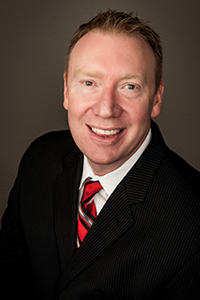
Russell Rowe
Russell Rowe founded Integrity Mortgage & Financial Inc. in Colorado Springs in March 2002 and serves as its president and CEO. He leads a family-operated mortgage company that helps Colorado homebuyers and homeowners compare purchase and refinance options.
Business-purpose loans for non-owner-occupied property; consumer protections may differ. This is educational and not financial advice. Loan programs and guidelines can change. Talk with a licensed mortgage professional about your specific scenario.
Integrity Mortgage & Financial Inc. NMLS #189744 · Russell Rowe NMLS #272647. Licensed in CO. Verify licensing at NMLS Consumer Access.
01 Rent information
Gather current leases or available market-rent estimates.
02 Expense details
Bring taxes, insurance, association fees, and other relevant costs.
03 Financing goals
Outline the purchase or refinance amount and planned holding period.
Program requirements vary. A conversation is not a commitment to lend or a loan approval.